From the Mill Floor to the National Conversation | Crossroads Strategies Initiative

Updated: Sep 2
The close of July provided one of the clearest examples yet of what NHLA’s partnership with Crossroads Strategies and Seven Letter, its public relations firm, is designed to accomplish.
On July 24, U.S. Environmental Protection Agency Administrator Lee Zeldin visited R.S. Coleman Lumber Company in Culpeper, Virginia. The visit was part of the EPA’s Powering the Great American Comeback initiative, which seeks to advance the agency’s environmental mission while supporting American manufacturing and economic growth.
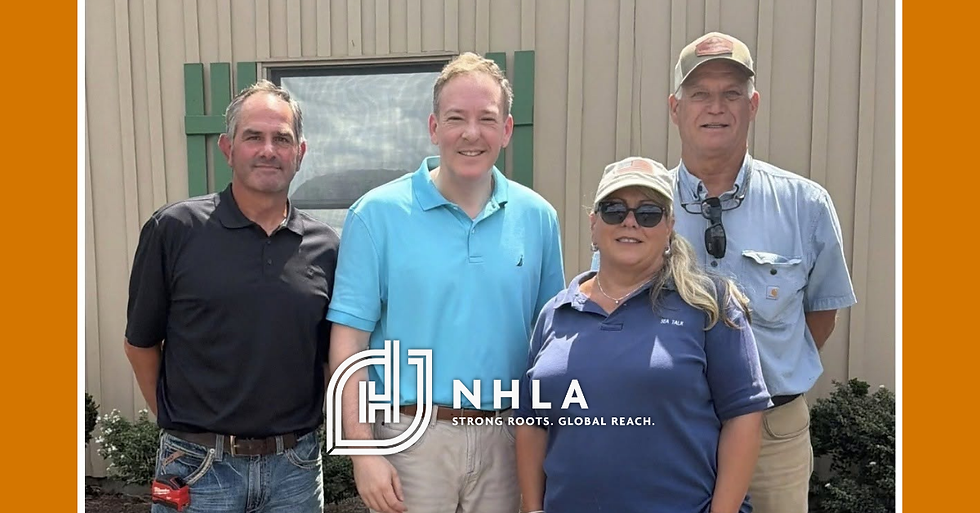
For readers of Hardwood Matters, the importance of bringing a Cabinet-level official into a working hardwood mill may seem obvious. But the value of this visit goes beyond a single tour. It demonstrates how NHLA’s advocacy initiative can connect what is happening on the mill floor with conversations taking place in Washington — and then carry that story to a broader audience.
WHO IS LEE ZELDIN?
Zeldin was sworn in as the EPA’s 17th administrator on Jan. 29, 2025. Before joining the Trump administration, he represented New York’s 1st Congressional District from 2015 to 2023 and served in the New York State Senate from 2011 to 2014.
Zeldin also served 22 years in the military. He deployed to Iraq in 2006 as a paratrooper with the Army’s 82nd Airborne Division and retired as a lieutenant colonel in the Army Reserve in May 2025.
That background matters because Zeldin approaches the EPA as both an environmental agency and an institution that can affect domestic investment, manufacturing and national economic security. His leadership agenda is organized around the Powering the Great American Comeback initiative, announced shortly after he took office.
UNDERSTANDING THE FIVE PILLARS
The initiative includes five pillars intended to guide the EPA’s work:
1. Clean Air, Land and Water for Every American
2. Restore American Energy Dominance
3. Permitting Reform, Cooperative Federalism and Cross-Agency Partnership
4. Make the United States the Artificial Intelligence Capital of the World
5. Protect and Bring Back American Auto Jobs
Not every pillar applies directly to hardwood manufacturing, but together they reveal how the administration connects environmental policy with domestic production, energy costs, technology, investment and American jobs.
The first pillar centers on the EPA’s traditional responsibility to protect human health and the environment. This gives the hardwood industry an opportunity to explain the environmental value of a renewable material grown in sustainably managed American forests — particularly when compared with imported substitute products made with plastics, chemicals and other nonrenewable materials.
The second pillar focuses on energy production and costs. Energy is a major operating expense for hardwood manufacturers, and mills also play a role in the renewable-energy economy through the productive use of bark, sawdust and other wood residuals.
The third pillar may have the most immediate connection to manufacturers. In announcing the initiative, Zeldin said American businesses should not have to navigate “years-long, uncertain, and costly permitting processes” when investing domestically. The pillar calls for permitting reform, cooperation among federal and state governments, and stronger partnerships with businesses while maintaining environmental safeguards.
The fourth pillar addresses artificial intelligence and the technology infrastructure needed to support it. Although framed around making the United States a global leader in AI, it also reflects a larger administration priority: encouraging advanced technology and related investment in the United States. Hardwood manufacturers are already adopting scanning, optimization, robotics, automation and other technologies to improve recovery and remain competitive.
The fifth pillar focuses specifically on restoring American auto jobs, but its broader emphasis on domestic manufacturing is relevant to hardwood. Both industries rely on skilled workers, strong supply chains, reliable domestic markets and policies that allow American manufacturers to compete.
Seen in that context, Zeldin’s visit was not simply a tour of a lumber company. It created an opportunity to place hardwood manufacturing within the administration’s existing priorities.
BRINGING WASHINGTON TO THE MILL FLOOR
Reports and statistics are important, but they cannot fully communicate what it means when a mill reduces production, lays off employees, or closes altogether. A mill visit gives policymakers an opportunity to see the equipment, meet employees and hear directly from the people making difficult business decisions.
During his visit, Zeldin toured R.S. Coleman Lumber and spoke with mill employees and industry representatives about the pressures facing domestic hardwood manufacturers. Those conversations included foreign competition, reduced market access, shrinking demand and the displacement of solid hardwood by imported substitute products.
He also recognized the importance of family-owned mills to the communities in which they operate. R.S. Coleman Lumber, which has produced lumber and hardwood products since the 1940s, gave the administrator a ground-level view of how federal policy, market conditions and foreign competition affect an actual business and workforce.
That perspective matters. It helps an administration official understand that the hardwood industry is not an abstract line in an economic report. It consists largely of family-owned companies that support manufacturing, forestry, transportation and jobs in communities where comparable employment opportunities may be limited.
BUILDING A CONSISTENT MESSAGE
The visit allowed industry representatives to communicate a clear and consistent message: American hardwood is a renewable, durable and domestically produced material that supports rural economies and a much larger manufacturing supply chain.
Developing this message requires listening to operators first. Cross-roads Strategies can help carry the industry’s priorities into policy discussions, while Seven Letter can translate those priorities into stories that reach audiences outside the industry. But the message must begin with what members are actually experiencing.
That is why visits like this are so valuable. They ensure that NHLA’s advocacy is grounded in the realities of running a hardwood business — not simply in assumptions made from Washington.
TURNING A VISIT INTO A PUBLIC RECORD
Zeldin’s visit generated coverage across wood products and manufacturing publications. The EPA’s account of the tour confirmed that hardwood producers discussed their current operating challenges with Zeldin and explored ways the agency’s agenda could better recognize and support the industry.
That coverage creates a public record. It gives NHLA and its partners something concrete to carry into future meetings with administration officials, members of Congress, federal agencies and other stakeholders. The industry can now point to a visit, the people involved, the concerns raised and the administration’s own public recognition of the industry.
It also connects the hardwood industry’s message to policy priorities the administration has already identified: domestic manufacturing, American jobs, reasonable permitting, energy costs, technological investment, environmental stewardship and stronger rural communities.
This is the cycle the initiative is intended to create: bring influential decision-makers to the ground level of the hardwood industry, build consistent messages around what they learn, generate public attention and carry that momentum back into Washington.
One mill visit will not solve the challenges facing the hardwood industry. But it can open doors, establish credibility and give policy-makers a clearer understanding of what is at stake.
The visit to R.S. Coleman Lumber was not simply a memorable moment. It was an example of advocacy working as intended — connecting the mill floor, the public conversation and the people with the authority to act.
Sources • U.S. Environmental Protection Agency. “EPA Administrator Lee Zeldin.” Updated Jan. 5, 2026.
• U.S. Environmental Protection Agency. “EPA Administrator Lee Zeldin Announces EPA’s ‘Powering the Great American Comeback’ Initiative.” Feb. 4, 2025.
• U.S. Environmental Protection Agency. “Administrator Zeldin Wraps Swing Through Virginia.” July 30, 2026.
• Adams, Larry. “EPA Administrator Lee Zeldin Tours Virginia Hardwood Sawmill.” Woodworking Network, July 28, 2026.



.jpg)
.jpg)